
Translating Documents with AI: Breaking Language Barriers in 2026
Say goodbye to 'lost in translation'. Discover how AI-powered document synthesis preserves layouts while translating text perfectly in 2026.
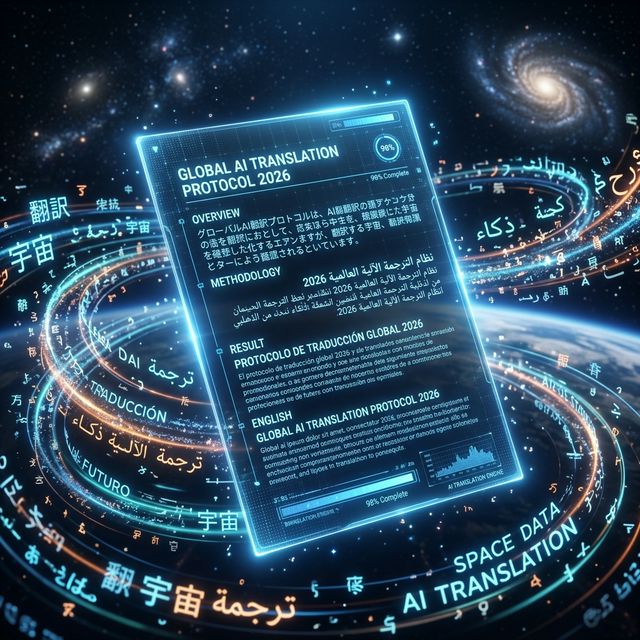
Translating Documents with AI: Breaking Language Barriers in 2026
In 2026, the global economy is more connected than ever. However, language remains one of the most significant friction points in international business. For years, we had to choose between a "fast" translation that lost all document formatting, or a "slow" manual translation that was expensive and time-consuming.
Thanks to the rise of Multimodal Large Language Models (LLMs), that compromise is a thing of the past.
The Evolution: From Text to Layout
Early translation tools worked on a "text-string" basis. They would scrape the words out of your PDF, translate them, and hand you back a plain text file. The problem? You lost the tables, the charts, and the visual hierarchy that made the document readable.
In 2026, we use Layout-Aware AI Synthesis. This technology doesn't just translate the words; it "re-renders" the entire page. If a Japanese sentence is shorter than its English equivalent, the AI intelligently adjusts the font size and spacing to ensure the page remains visually balanced.
Why 2026 AI Translation is Superhuman
- Contextual Nuance: AI now understands the difference between "technical" documentation and "marketing" copy, adjusting the tone accordingly.
- Cultural Adaptation: It doesn't just translate words; it localizes idioms and measurements (e.g., converting miles to kilometers automatically).
- Real-Time Processing: Complex 100-page manuals can now be translated into dozens of languages in under a minute.
How to Translate Your PDF Safely
Security is a major concern when using AI. Many public AI models "learn" from your inputs. If you're translating a confidential legal contract, you don't want that data ending up in a public training set.
Using a Private Translation tool is critical. Look for services that:
- Process the translation via secure, sandboxed APIs.
- Have strict "zero-retention" policies.
- Allow for side-by-side editing before you finalize the download.
The Future: Seamless Global Teams
We are nearing a "Star Trek Universal Translator" moment for documents. As AI continues to bridge the gap between human languages, the barriers to entry for small businesses to enter global markets are collapsing.
Conclusion
Document translation in 2026 is about more than just words—it's about preserving the intent and design of your original message. Whether you're a student researching global papers or a business owner expanding overseas, AI translation tools are your most powerful ally in a borderless digital world.